
Change or Evolution? Setting the Right Pace for Sustainable Improvement
Aug 27, 2026
“Success in early years is not achieved by sprinting towards the next initiative. It is built through purposeful, sustainable steps that allow children, practitioners and leaders to grow together.”
There is one thing we can be certain of in early years.
It will continue to evolve.
Research develops. Guidance changes. Inspection frameworks are refined. Children’s needs shift. Families’ expectations grow. New ideas emerge, and with every new development comes another conversation about what we should be doing differently.
For many leaders, it can feel relentless.
Before one initiative has truly become embedded, another appears on the horizon. Teams begin to hear phrases such as “we’re changing this,” “we’re introducing that,” or “from next week we’re doing things differently.”
Eventually, change itself becomes exhausting.
But perhaps the issue isn’t that early years changes.
Perhaps the issue is how we choose to think about it.
From Change to Continuous Development
At Marathon Early Years Consultancy, we encourage leaders to think differently.
Rather than viewing every new expectation as another change to manage, what if we recognised that early years is built upon a continuous cycle of development and evolution?
The best nurseries are rarely those introducing the greatest number of new initiatives.
They are the settings that continually refine what they already do well.
They remain curious.
They reflect.
They make thoughtful adjustments.
Most importantly, they understand that meaningful improvement takes time.
This subtle shift in thinking changes everything.
Instead of asking,
“What do we need to change next?”
Leaders begin asking,
“What is the next natural step in our journey?”
Improvement Should Feel Purposeful, Not Overwhelming
One of the most common challenges we encounter during quality improvement visits is not a lack of ambition.
It is having too much ambition all at once.
Leaders often have a clear vision for the future. They know where they want the setting to be, the quality of practice they aspire to achieve and the experiences they want every child to receive.
The difficulty comes when that vision is translated into dozens of priorities at the same time.
A new planning system.
A revised curriculum.
Changes to the environment.
Updated supervision.
New assessment approaches.
Different mealtime routines.
Revised paperwork.
Additional training.
Each idea may have value.
Collectively, however, they can leave practitioners wondering which change matters most.
When everything becomes a priority, nothing truly becomes embedded.
Sustainable Improvement Happens One Step at a Time
Think about learning to walk.
Children do not master walking because someone expects them to run.
They build strength.
They wobble.
They fall.
They adjust.
They try again.
Every step prepares them for the next.
Leadership is no different.
Teams need time to understand new expectations, practise them, reflect on what is working and build confidence before moving forward again.
This is not about lowering expectations.
It is about increasing the likelihood of long-term success.
The strongest leaders understand that sustainable improvement is rarely dramatic.
It is consistent.
The Pace Matters
There is often pressure within leadership to demonstrate rapid improvement.
However, moving quickly is not always the same as moving effectively.
Introducing a new initiative during a staff meeting is relatively easy.
Embedding it into everyday practice is something entirely different.
Embedding requires:
- clarity
- modelling
- coaching
- professional dialogue
- opportunities to practise
- honest reflection
- time
Without these, even the best ideas risk becoming another short-lived initiative rather than lasting improvement.
The question is not,
“Have we introduced it?”
The better question is,
“Has it become part of who we are?”
Bringing Your Team With You
Successful improvement is never something that happens to a team.
It is something a team experiences together.
Practitioners need to understand why a change matters.
They need opportunities to ask questions, make mistakes, reflect and grow.
When leaders create psychological safety, practitioners become more willing to try something different.
When leaders celebrate progress rather than perfection, confidence grows.
When leaders revisit improvements instead of constantly replacing them, consistency begins to develop.
Children benefit because practice becomes embedded rather than temporary.
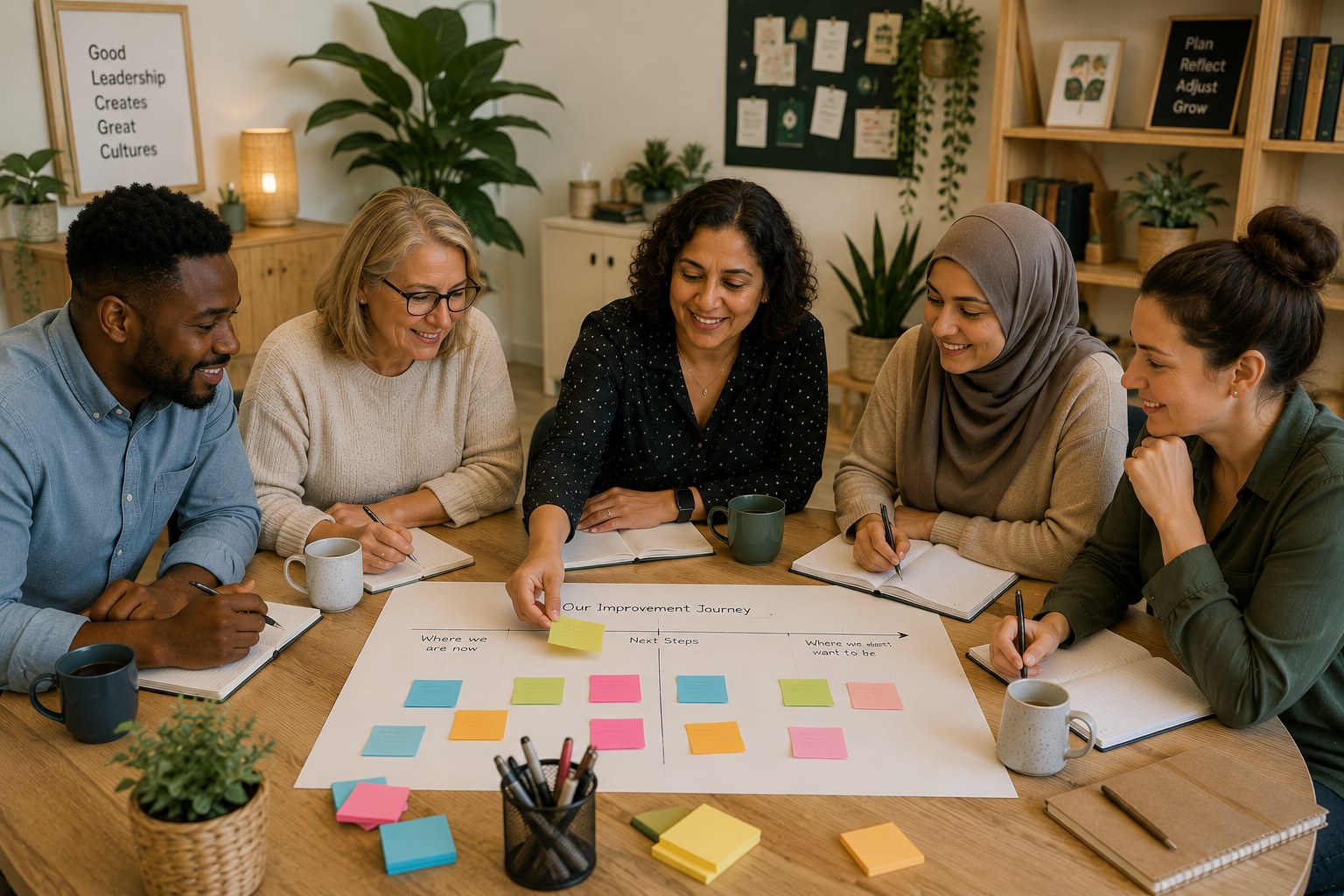
Planning the Journey
One of the most valuable questions leaders can ask themselves is:
What is the single improvement that will have the greatest impact on children’s experiences right now?
Starting here creates clarity.
Once practice is embedded, the next step naturally becomes easier.
Improvement is no longer driven by urgency.
It is driven by purpose.
Like building a strong foundation before adding another floor, each improvement strengthens the one that follows.
Why We Chose the Name Marathon
People occasionally ask why we chose the name Marathon.
The answer is simple.
Because lasting success has never been about sprinting.
It is about having a clear destination, understanding the route ahead and setting a pace that allows everyone to reach the finish line together.
In early years, that means recognising that improvement is never truly finished.
There will always be another opportunity to reflect.
Another conversation to have.
Another idea to explore.
Another child whose experience can become even better.
The goal is not to complete improvement.
The goal is to create a culture where improvement becomes part of everyday practice.
One thoughtful step at a time.
A Final Reflection
The pace you set as a leader becomes the pace your team experiences.
If every month feels like another race to implement something new, practitioners can quickly become overwhelmed, and meaningful improvement may never have the opportunity to take root.
Instead, ask yourself:
- Does my team have clarity about our current priorities?
- Have we embedded our last improvement before introducing the next?
- Are we celebrating progress as well as identifying what comes next?
- Are we building confidence, or creating pressure?
- Will this decision improve children’s experiences today, and still be evident in twelve months’ time?
Early years will continue to evolve.
That is something to embrace.
The challenge for leaders is not to keep running faster every time something changes.
It is to set a pace that enables children, practitioners and the whole organisation to grow with confidence.
After all, the most meaningful journeys are rarely the quickest.
They are the ones where every step has purpose.