
The Power of the Pause: More Than a Routine
Sep 16, 2026

Over the last two weeks, I have been exploring what happens when we pause long enough to notice the learning that already exists within an ordinary early years day.
In Week 1, we asked where is the learning hiding?
Last week, we considered what happens before we do it for them, and the importance of participation before independence.
This week, I want to look at the routines that happen so frequently that we can almost stop noticing them altogether.
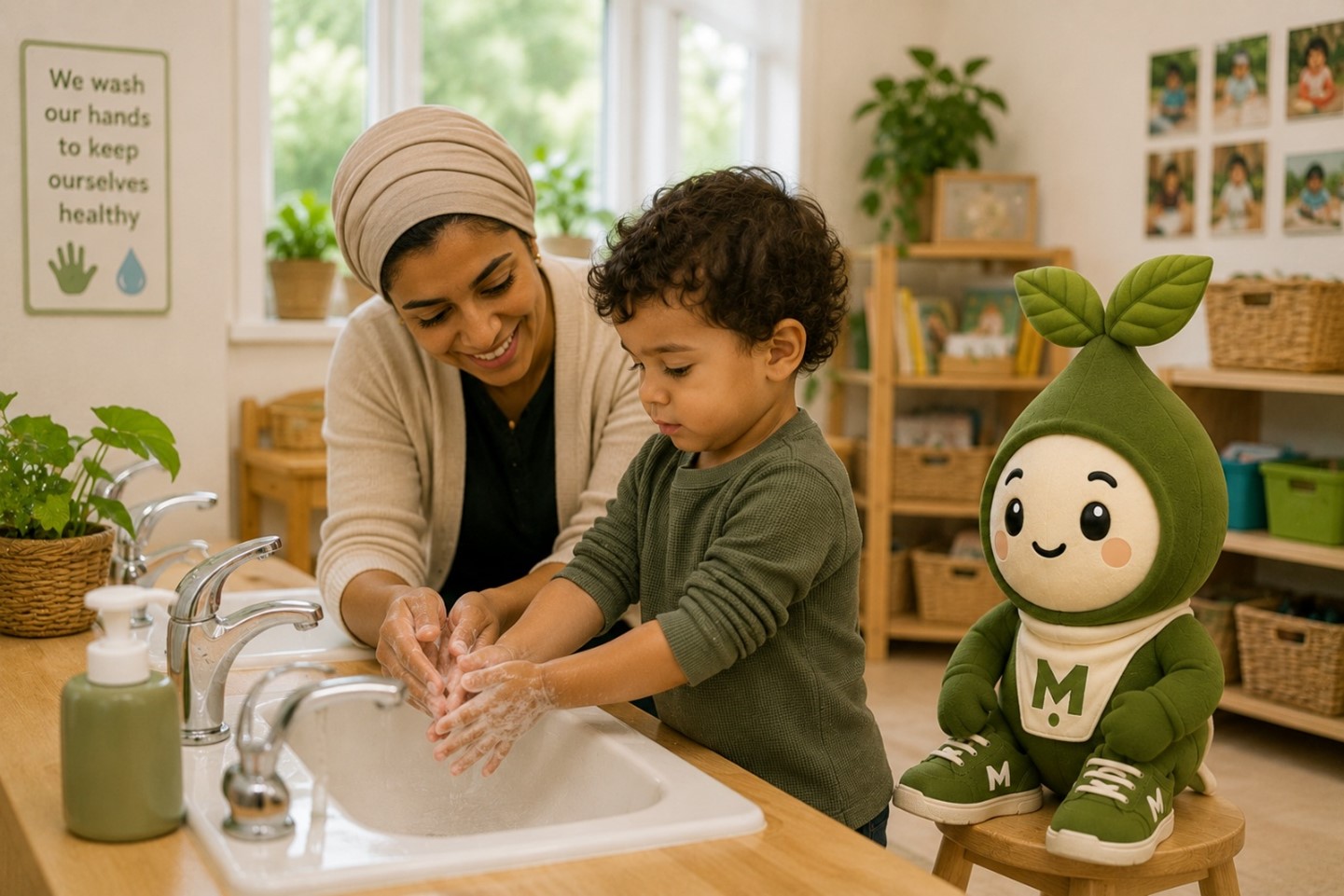
Washing hands.
Wiping a face.
Changing a nappy.
Going to the toilet.
Preparing for sleep.
Getting dressed after messy or water play.
These are essential care routines. They need to be safe, hygienic and completed consistently.
But are they simply things we need to get done?
Or could there be considerably more happening?
The Handwashing Queue
Picture the familiar scene.
Lunch is approaching and several children need to wash their hands.
“Come on, wash your hands.”
“Soap.”
“Rub them together.”
“Rinse.”
“Get a paper towel.”
“Put it in the bin.”
“Next.”
The children have washed their hands.
The routine has been completed.
But who managed the process?
The adult.
Now imagine we pause.
A child approaches the sink.
Do they know why they are there?
Can they turn on the tap?
Do they remember what comes next?
Can they operate the soap dispenser?
Do they know how much they need?
Can they manage their sleeves?
Do they remember to wash all parts of their hands?
What happens when the soap slips from their hands?
Where does the towel go when they have finished?
There is sequencing, memory, coordination, physical development, self-care, decision-making and an increasing understanding of hygiene contained within one very ordinary routine.
The learning isn’t something we need to add.
It is already happening.
Do We Need to Turn Everything Into a Lesson?
No.
And I think this distinction is important.
Recognising the learning within routines does not mean turning every care moment into a planned teaching experience.
We don’t need to count every pump of soap.
We don’t need to ask what colour the towel is.
We don’t need to turn getting dressed into a phonics session.
Sometimes, in our enthusiasm to demonstrate learning, we can actually make an authentic experience less meaningful.
The opportunity isn’t in adding learning.
It is in recognising what the child is already doing, understanding or trying to master and considering whether there is an appropriate opportunity to extend it.
That extension might be language.
It might be modelling.
It might be giving the child responsibility.
It might be allowing them to complete another part of the process.
And sometimes it might simply be giving them enough time to remember what happens next.
Care Is Pedagogy
There is another reason these moments matter.
Care routines aren’t interruptions to our pedagogy.
They are part of it.
Particularly for our youngest children, some of the most meaningful interactions of the day happen during care.
A nappy change, for example, isn’t simply a hygiene procedure.
Of course, safe and hygienic practice is essential.
But consider the child’s experience.
One practitioner.
One child.
Close interaction.
Conversation.
Eye contact.
Anticipation.
Familiar sequences.
Body awareness.
The child beginning to understand what is happening and what will happen next.
Opportunities to participate.
“Can you lift your leg?”
“Your trousers are next.”
“Can you pull them up?”
The child isn’t simply being changed.
They are participating in their own care.
And, importantly, they are experiencing how an adult responds to them during a moment in which they are particularly dependent upon that adult.
Are we rushing?
Are we talking over them to another practitioner?
Are we completing the procedure to the child?
Or are we completing it with them?
That difference matters.
The Child Who Is Always ‘Done To’
Think about how many things can happen to a young child during a nursery day.
Their coat is put on.
Their nose is wiped.
Their hands are washed.
Their nappy is changed.
Their shoes are put on.
Their face is cleaned.
Their bed is prepared.
Their clothes are changed.
Their belongings are packed.
Every one of those actions may be necessary.
But when do we begin inviting the child into the process?
A child doesn’t suddenly become independent because we decide they are old enough.
They become independent because they have experienced hundreds of opportunities to participate.
Perhaps they hold the wipe.
Push their arm through the sleeve.
Lift their foot.
Pull their trousers.
Carry their clothes.
Find their towel.
Recognise their belongings.
Remember the next step.
Participation before independence.
Again.
Washing Hands Without the Running Commentary
Last week, I explored how adults can physically allow children to complete a task while still doing all of the thinking for them.
Handwashing is a perfect example.
“Wet your hands.”
“Soap.”
“Rub.”
“Rinse.”
“Turn it off.”
“Dry them.”
The child’s hands are moving.
But the adult is remembering the sequence.
So what happens if we remove one instruction?
And then another?
Perhaps instead of:
“Now get the soap.”
We pause.
Does the child remember?
Perhaps they look at the dispenser.
Perhaps they watch another child.
Perhaps they stop and think.
Maybe they don’t know.
Then we can support them.
But if we provide the next instruction before the child has even had an opportunity to think, we never discover what they already know.
This is where the pause becomes a useful assessment tool too.
When we stop telling, we start seeing.
Preparing for Sleep
Sleep routines offer another opportunity to think about children’s participation.
What happens before a child rests?
Do adults prepare everything and then bring children into a finished sleep space?
Or can children participate?
Finding their sleep bag.
Carrying their bedding.
Helping to prepare their bed.
Taking off their shoes.
Putting their belongings somewhere appropriate.
Recognising where they sleep.
Beginning to understand what their body needs.
For some children, preparing for sleep can also become part of the transition into rest.
The routine itself communicates:
Something is changing.
My body is getting ready.
I know what happens next.
That predictability can be incredibly important.
Again, the aim isn’t to make the routine take as long as possible.
It is to recognise that how we arrive at the next part of the day matters too.
What About Time?
The obvious challenge is time.
If every child completes every care routine entirely independently, the nursery day could grind to a halt.
That’s not what I’m suggesting.
Children need different levels of support.
Sometimes adults need to complete something quickly.
Sometimes hygiene or safety means we need to intervene.
Sometimes a child’s individual needs mean participation looks very different.
Good pedagogy isn’t about applying one rule to every child.
It’s about knowing the child and making intentional decisions.
The pause may only last a few seconds.
That’s often enough.
Enough to see whether the child remembers.
Enough to allow them to attempt something.
Enough to notice that they are trying to communicate.
Enough to realise that we were about to do something they can already do for themselves.
Pause. Notice. Extend.
So what might this look like within everyday care?
Pause
Before giving the next instruction or automatically completing the next part of the routine, wait.
Does the child know what comes next?
Notice
What are they already doing?
What do they understand about the routine?
Which parts can they manage?
Where do they genuinely need support?
What are they communicating?
Extend
Could they take responsibility for another part?
Could we introduce useful language?
Could we model rather than complete?
Could we reduce our verbal prompts?
Could we make something more accessible so they can manage it themselves next time?
And, importantly:
Could we give them another few seconds?
Look at the Routine Differently
This week, I would encourage practitioners and leaders to choose one care routine and observe it differently.
Don’t start by asking whether the routine is being completed efficiently.
Of course, hygiene, safety and children’s wellbeing remain essential.
Instead, look at the child’s experience.
Who is doing most of the thinking?
Who is doing most of the doing?
How much does the adult talk?
How much opportunity does the child have to respond?
Which parts of the routine could children participate in?
Are resources positioned so children can increasingly manage them?
Are adults responding to individual capability, or is every child receiving exactly the same level of help?
And perhaps most importantly:
Does the routine feel like something being done to the child, or something happening with them?
More Than a Routine
There will always be tasks that need completing in early years.
Hands need washing.
Nappies need changing.
Faces need cleaning.
Children need supporting with toileting.
Beds need preparing.
Clothes sometimes need changing.
But the fact that something is routine doesn’t make it insignificant.
Quite the opposite.
When something happens several times every day, think about the cumulative opportunity.
One handwash may last a minute.
But multiply those moments across days, weeks, months and years.
Think about how many opportunities a child has to remember.
To participate.
To communicate.
To make decisions.
To coordinate their body.
To understand what comes next.
To need a little less help than yesterday.
These aren’t the moments between learning.
They are part of how children learn.
So perhaps the next time we’re about to say:
“Right, let’s get this done.”
We could pause.
Just for a moment.
Because something very ordinary might be offering an extraordinary amount of learning.
Pause. Notice. Extend.
Next week, we move from the routines themselves to something early years settings do many times every day: getting children from one place to another.
Because perhaps the learning doesn’t start when we reach the garden.
Perhaps the journey there matters too.