
Beyond Mealtimes: Taking a Whole-Setting Approach to Safer Eating
Aug 6, 2026
When practitioners think about safer eating, many immediately picture lunchtime.
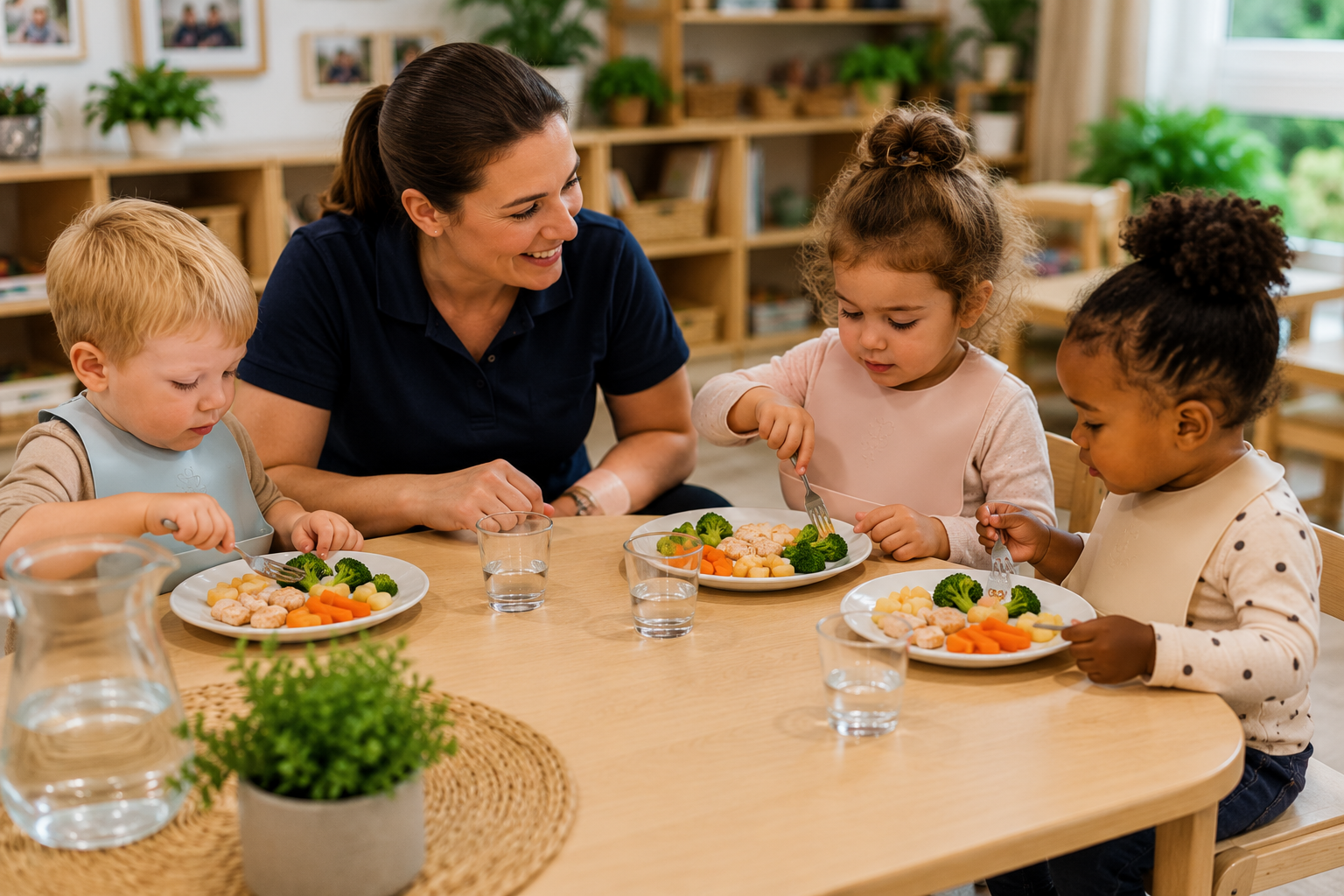
Children sitting together, staff supervising meals, food cut appropriately and allergies carefully managed.
Whilst these are undoubtedly essential, safer eating extends far beyond the dining table. It is woven throughout the entire nursery day, influencing how children explore, investigate and learn through play.
With renewed focus across the early years sector on children’s safety and risk management, now is an excellent opportunity for leaders to pause and review their provision through a wider lens. The question is no longer simply, “Are our mealtimes safe?” but rather, “Have we considered every opportunity where a child may place something into their mouth?”
Looking Beyond the Plate
Young children naturally explore the world through their senses. They touch, smell, squeeze, squash and, particularly during the earliest years, taste.
This means opportunities for potential choking hazards can appear in places we might not immediately consider.
Take a walk around your nursery today.
Consider:
- Does your play dough contain small decorative items such as beads, pasta or googly eyes?
- Are sensory trays filled with dried beans, chickpeas, popcorn kernels or decorative stones?
- Are loose parts available that could easily fit into a young child’s mouth?
- Are children using natural resources that vary in size and suitability for their developmental stage?
- Do older children’s resources remain accessible to younger children during mixed-age times?
None of these are inherently unsafe.
However, each requires thoughtful consideration, robust supervision and an understanding of the children using them.
Food Play Requires the Same Professional Curiosity
Food-based activities can be incredibly engaging and support children’s language, creativity and sensory development.
Yet food play also deserves careful reflection.
Leaders may wish to consider:
- Is food being used because it genuinely enhances learning, or could an alternative resource achieve the same outcome?
- Are practitioners confident in recognising when a child is attempting to eat resources intended for play?
- Does the activity remain appropriate for the developmental stage of every child involved?
- Have allergies been considered, even when food is not intended to be eaten?
- Are practitioners modelling appropriate language to distinguish between food for eating and resources for exploring?
Professional curiosity is just as important here as it is within safeguarding.
Rather than assuming an activity is safe because it has always been used, ask, “What could happen?” and “What would reduce that risk whilst still allowing children to learn?”
Malleable Play Deserves a Second Look
Play dough is often viewed as a low-risk, everyday resource.
However, when enhanced with loose parts or used alongside natural materials, it can quickly present additional considerations.
Buttons, gems, dried pasta, sequins, seeds and miniature resources can significantly alter the level of supervision required. Likewise, resources such as googly eyes, bottle tops and other craft materials used within creative experiences should also be considered through the same lens.
Equally, homemade play dough may contain allergens, whilst scented varieties may encourage younger children to mouth the resource.
This is not about removing rich learning opportunities.
It is about ensuring practitioners remain vigilant and that enhancements are selected intentionally rather than simply because they look attractive.
Mealtimes Still Matter
Of course, mealtimes remain one of the highest-risk periods of the day.
As leaders, ask yourself:
- Are practitioners sitting with children and actively supervising?
- Can every child be seen at all times?
- Are staff confident in recognising the early signs of choking?
- Is conversation calm and purposeful rather than rushed?
- Is food consistently prepared according to children’s age and developmental stage?
- Are children supported to develop independence safely?
Often, the smallest operational decisions have the greatest impact.
How staff are deployed.
Where adults choose to sit.
Whether practitioners remain at the table or regularly leave to fetch forgotten items.
These everyday routines influence children’s safety far more than many written policies ever will.
Prevention and Preparedness Go Hand in Hand
Whilst our primary focus should always be on preventing choking incidents, leaders must also consider how prepared their team would be should one occur.
The EYFS requires at least one practitioner with a current Paediatric First Aid (PFA) qualification to be available at all times and accompany children on outings. However, holding a qualification is only part of the picture. Leaders should ask themselves whether those practitioners feel genuinely confident to act quickly and decisively in the event of a choking emergency.
When was the last time your PFA-trained practitioners physically rehearsed the sequence of responding to a choking child? Would they confidently recognise the difference between a child who is coughing effectively and one whose airway is completely obstructed? Would they know when to commence CPR should the child become unresponsive?
These are not questions designed to catch people out. They are opportunities to build confidence before an emergency arises.
Scenario-based discussions, practical refreshers during team meetings and regular opportunities to revisit emergency procedures can all help ensure knowledge remains current and, more importantly, that practitioners have the confidence to put that knowledge into practice under pressure.
The most effective leaders recognise that first aid competence is not measured by a certificate displayed on the wall, but by the confidence and capability of practitioners to respond calmly and effectively when every second counts.
Leadership Starts with Seeing the Environment Differently
One of the most valuable exercises a leadership team can undertake is completing a safer eating walk with fresh eyes.
Not to find fault.
Not to complete another audit.
But to understand the nursery from a child’s perspective.
What can children access?
What might they naturally put into their mouths?
Where could resources unintentionally become hazards?
Where does practice differ between rooms?
Consistency is often where the greatest opportunities for improvement lie.
Consider reviewing your provision through several different lenses:
- Mealtimes and snack routines
- Malleable and sensory play
- Food-based activities and cooking experiences
- Loose parts and natural resources
- Outdoor provision
- Staff deployment and supervision
- First aid preparedness and emergency response
Looking at each of these areas individually often highlights opportunities that may otherwise be overlooked.
Creating a Culture Rather Than Compliance
Outstanding safer eating practice is not created through a single training session or annual policy review.
It develops through daily conversations.
Reflective supervision.
Professional challenge.
Learning from incidents and near misses.
Encouraging practitioners to think beyond compliance creates a culture where risk is continually assessed rather than simply assumed to have been managed.
The strongest settings are those where every member of the team feels confident asking, “Is there a safer way we could do this?”
Questions for Leaders
As you review your provision this month, consider asking yourself:
- Would a new member of staff immediately recognise our safer eating expectations?
- Have we reviewed every area where children may mouth resources, not just during meals?
- Are our sensory and malleable play experiences developmentally appropriate for the children accessing them?
- Do our practitioners understand why safer eating guidance exists, rather than simply following procedures?
- Are our PFA-trained practitioners confident in responding to a choking emergency today, not just qualified to do so?
- If an inspector walked through our provision today, would they see safer eating embedded across the whole nursery?
Final Reflection
Safer eating is not a standalone procedure.
It is part of your safeguarding culture.
When leaders broaden their focus beyond the dining table, they create environments where children can confidently explore, investigate and develop whilst remaining safe throughout every part of the nursery day.
At Marathon Early Years Consultancy, we believe that safer eating is about much more than compliance. It is about creating a culture where every practitioner understands risk, remains professionally curious and feels confident to act should an emergency arise. Through reflective reviews, leadership coaching and practical quality assurance visits, we support settings to strengthen both preventative practice and emergency preparedness, ensuring children’s safety remains at the heart of every experience.